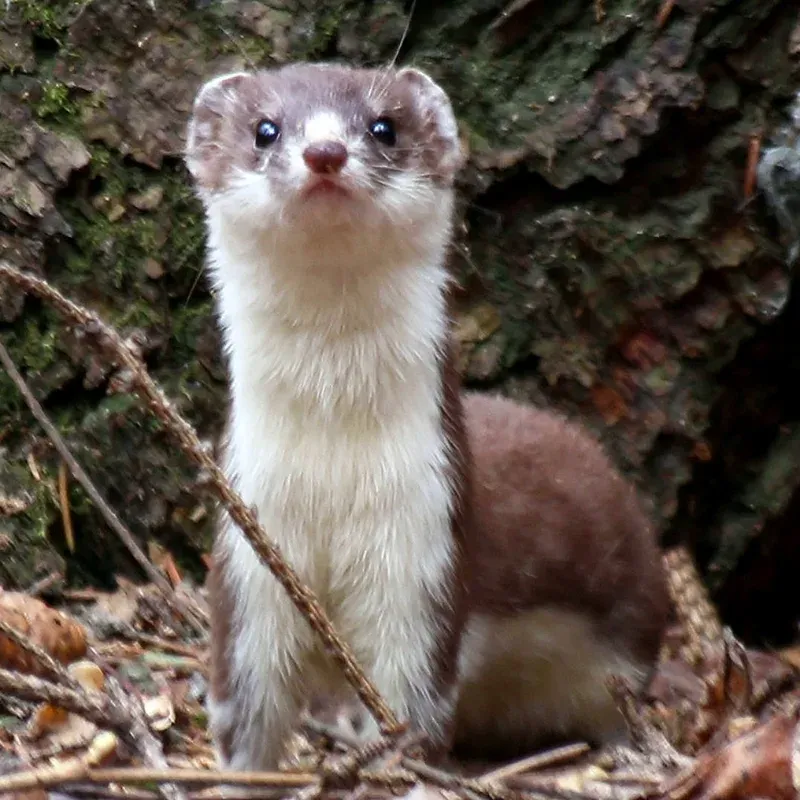
Weasel
The weasel is the smallest of the three mustelid species introduced to New Zealand and the least studied in terms of its impact on native wildlife. Like its relatives the stoat and ferret, it was introduced in the 1880s to control rabbits and has since become established across much of the country. Weasels are fast, aggressive hunters that can access very small burrows and crevices.
Impact on Native Wildlife
Weasels prey on small birds, lizards, and invertebrates. They are capable of taking adult grey warblers and other small native birds, as well as raiding nests for eggs and chicks. While less studied than stoats, they contribute to the overall predation pressure on native wildlife.
Signs to Look For
Weasels are rarely seen due to their small size and secretive nature. Tracking tunnels are the most reliable way to detect their presence. Their footprints are smaller than stoat prints with five toes.
Did you know?
Weasels are the smallest carnivores in the world, with males weighing as little as 50 grams. Despite their tiny size, they are capable of killing prey much larger than themselves through a specialised bite to the base of the skull.
Spotted a Weasel?
Report your sighting and help us track predator activity in the area.
Report a Sighting