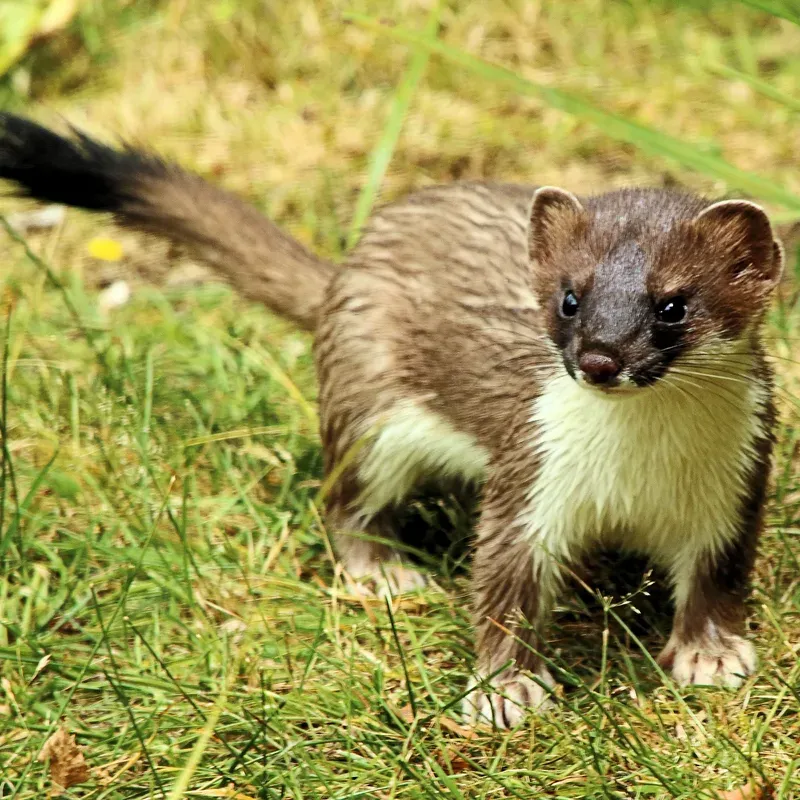
Stoat
The stoat is the most destructive predator of native wildlife in New Zealand and the single biggest threat to many of the species Predator Free Pāuanui works to protect. Brought to New Zealand in the 1880s to control rabbit populations, stoats rapidly spread across the entire country with devastating consequences. Fast, intelligent, and highly adaptable, they are capable of climbing trees to raid bird nests and entering burrows to kill incubating adults.
Impact on Native Wildlife
Stoats are responsible for the decline of kiwi, kākā, bellbird, tomtit, and many other native species. In beech mast years — when trees produce a massive seed crop — stoat populations explode, creating what is known as a 'stoat plague' that can wipe out entire populations of nesting birds in a single season. Without active trapping, fewer than 5% of kiwi chicks survive to adulthood.
Signs to Look For
Footprints in tracking tunnels, feathers scattered beneath trees, and eggshell fragments near nests are common signs of stoat predation. They are occasionally seen in daylight, particularly in summer.
Did you know?
A female stoat can delay implantation of a fertilised egg for up to 10 months — meaning she can mate in summer but only give birth the following spring when conditions are optimal for raising young.
Spotted a Stoat?
Report your sighting and help us track predator activity in the area.
Report a Sighting