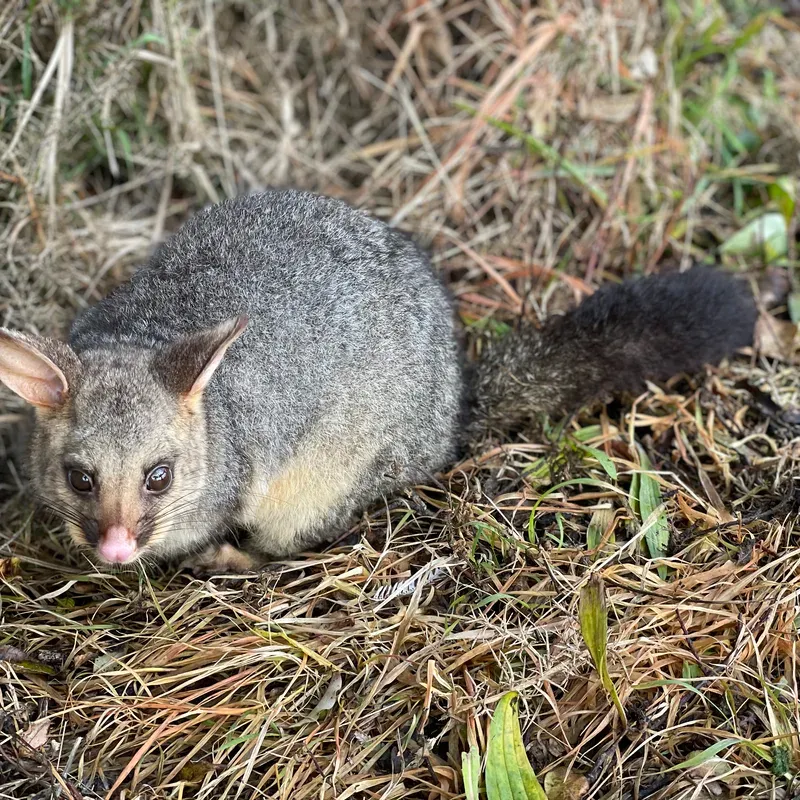
Common Brushtail Possum
The brushtail possum was introduced from Australia in 1837 to establish a fur trade. It became one of the most damaging pests ever released in New Zealand, stripping native forests, destroying bird nests, and competing with native wildlife for food. There are an estimated 30 million possums in New Zealand, consuming approximately 21,000 tonnes of vegetation every single night.
Impact on Native Wildlife
Possums eat the eggs and chicks of native birds — including kiwi, kererū, and kākā — and compete with birds for the same fruit and nectar. They destroy the forest canopy by stripping leaves, bark, and flowers, reducing habitat for all forest birds. Possums are also a carrier of bovine tuberculosis (TB), posing a risk to livestock.
Signs to Look For
Eaten leaves and flowers with a distinctive tear rather than a clean cut, claw marks on tree trunks, large droppings, and fur caught on wire fences are all indicators of possum activity.
Did you know?
Possums are excellent climbers and will readily enter bird nest boxes and tree hollows. A possum can consume up to 150 metres of new leaf growth in a single night, which over time can kill trees entirely.
Spotted a Common Brushtail Possum?
Report your sighting and help us track predator activity in the area.
Report a Sighting